
The Artist Behind Some of Web3’s Most Distinctive Visual Language Goes Deeply Personal
In an NFT ecosystem often dominated by spectacle, Defaced has delivered something quieter, stranger, and far more intimate.
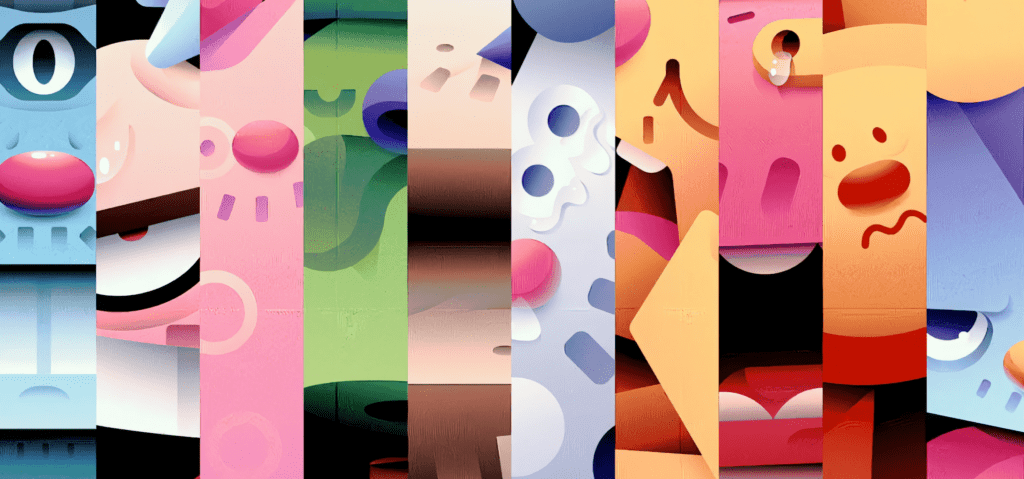
“A Series of Headaches” is exactly what it sounds like: twenty self-portraits derived from years of chronic headache journal entries. But the project is not documentary in the traditional sense. Instead, it transforms invisible pain into fragmented digital mythology—part memory archive, part psychological collage, part low-resolution dreamscape.
The result feels deeply human.
Pain as Metadata
On May 13, Defaced shared the conceptual framework behind the work, revealing that they have kept a headache journal since January 2021.
Each entry documented:
- Date
- Location
- Medication
- Brief emotional or physical descriptions
Some notes are devastatingly direct:
- “bath doesn’t help”
- “pecking my brain”
- “brain bulging out of my head”
Others drift into surrealism:
That contrast becomes central to the collection’s emotional power. Chronic pain often resists language. The body reaches for metaphor because literal description stops being enough.
Defaced doesn’t simply illustrate headaches—they build avatars for them.
A Series of Headaches. Twenty self-portraits drawn from a headache journal.
Details below ↓ pic.twitter.com/2VQQjHIA9k
— Defaced (@Defacedstudio) May 13, 2026
Self-Portraiture Through Collage and Memory
The project also functions as an exploration of identity formation through media, toys, games, and childhood aesthetics.
Defaced connects the work to early memories:
- Disney characters
- Dress-up and roleplay
- Kingdom Hearts figures
- Lego Star Wars on a flickering CRT television
- PS2-era visual language
This matters because the portraits are not realistic renderings. They are assembled identities—digital masks shaped from memory, nostalgia, illness, and symbolism.
The artist describes childhood play as “close to collage,” a powerful framing that explains the visual DNA of the collection. Objects absorbed into personal mythology become emotional vessels.
A Heartless figure from Kingdom Hearts paired with Pluto becomes more than merchandise—it becomes autobiographical architecture.
That emotional remixing is deeply native to internet culture and NFT culture alike.
The Influence of Hubert Airy and LSD: Dream Emulator
Two references anchor the conceptual framework:
Hubert Airy’s Migraine Aura Drawings
In the 19th century, physician Hubert Airy created famous visual representations of migraine auras based on his own experiences. These strange geometric distortions became early attempts to visually map invisible neurological phenomena.
Defaced draws from this lineage—not scientifically, but emotionally.
LSD: Dream Emulator
The cult PS1 title LSD: Dream Emulator and its accompanying dream journal book become another major influence. The game itself operates like unstable subconscious navigation: disconnected imagery, uncanny logic, emotional symbolism.
That influence is immediately legible in the project’s atmosphere.
The portraits feel like corrupted dream avatars pulled from damaged memory cards.
Going Back to Go Forward
One of the strongest themes in the series is regression as artistic evolution.
Defaced explains that their normal drawing style could not express these emotions adequately. To access something more truthful, they returned to the aesthetics of childhood:
- Low-poly visual language
- Early console-era textures
- Primitive digital rendering
- Nostalgic visual compression
In many ways, this mirrors broader movements in digital art and NFTs where artists increasingly revisit imperfect technologies to convey authenticity.
The polished hyper-rendered future no longer feels emotionally sufficient.
Texture, artifacting, glitches, and lo-fi aesthetics now carry emotional resonance because they resemble memory itself.
Why This Resonates in NFT Culture
NFTs have always been strongest when they preserve personal mythology rather than speculative value.
“A Series of Headaches” succeeds because it uses blockchain not as a gimmick, but as an archive for something deeply fragile:
- chronic pain
- emotional memory
- bodily experience
- internal distortion
The project feels less like collectible imagery and more like preserved psychological evidence.
And importantly, it continues a tradition that crypto art has uniquely enabled:
artists turning deeply personal experiences into globally accessible digital artifacts without compromise.
Final Thoughts
Defaced has created one of the most emotionally resonant NFT art projects of the year—not through spectacle, but through vulnerability.
“A Series of Headaches” transforms years of invisible suffering into symbolic self-portraits that feel haunted, nostalgic, and strangely comforting all at once.
The collection reminds us that digital art is at its most powerful when it gives shape to experiences that otherwise disappear the moment they’re felt.
In a market obsessed with noise, Defaced made something that aches quietly—and lingers.
TL;DR
Defaced’s “A Series of Headaches” transforms chronic headache journal entries into 20 symbolic self-portraits inspired by childhood gaming aesthetics, migraine aura drawings, and dream logic. Drawing from years of personal documentation, the project explores invisible pain, memory, and identity through emotionally charged digital collage and nostalgic low-poly visuals.