
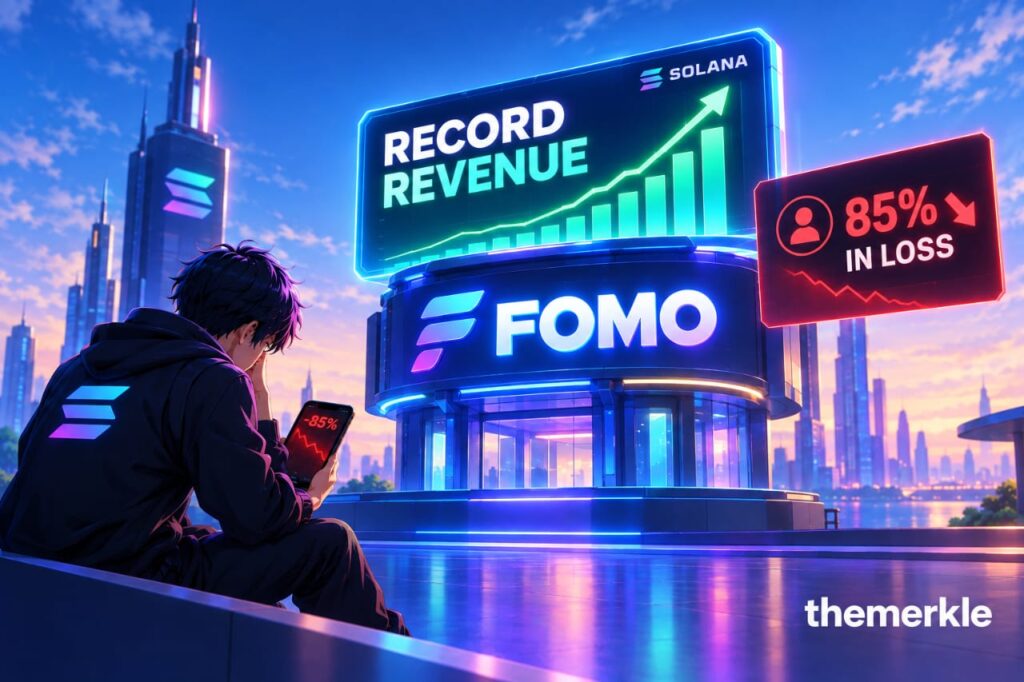
There’s a specific kind of tone-deaf moment that happens when a company like FOMO posts about hitting a milestone, and the replies underneath tell a completely different story than the one being celebrated. That’s exactly what’s playing out right now.
The app just beat Pump.fun to become Solana’s top revenue-generating protocol over a 24-hour stretch, and its cofounder is publicly proud of it. Meanwhile, according to at least one trader who’s actually used the platform, roughly 85% of FOMO’s users are sitting on losses. Read those two facts side by side, and the celebration starts to look a lot more uncomfortable.
What Actually Happened On Solana This Week
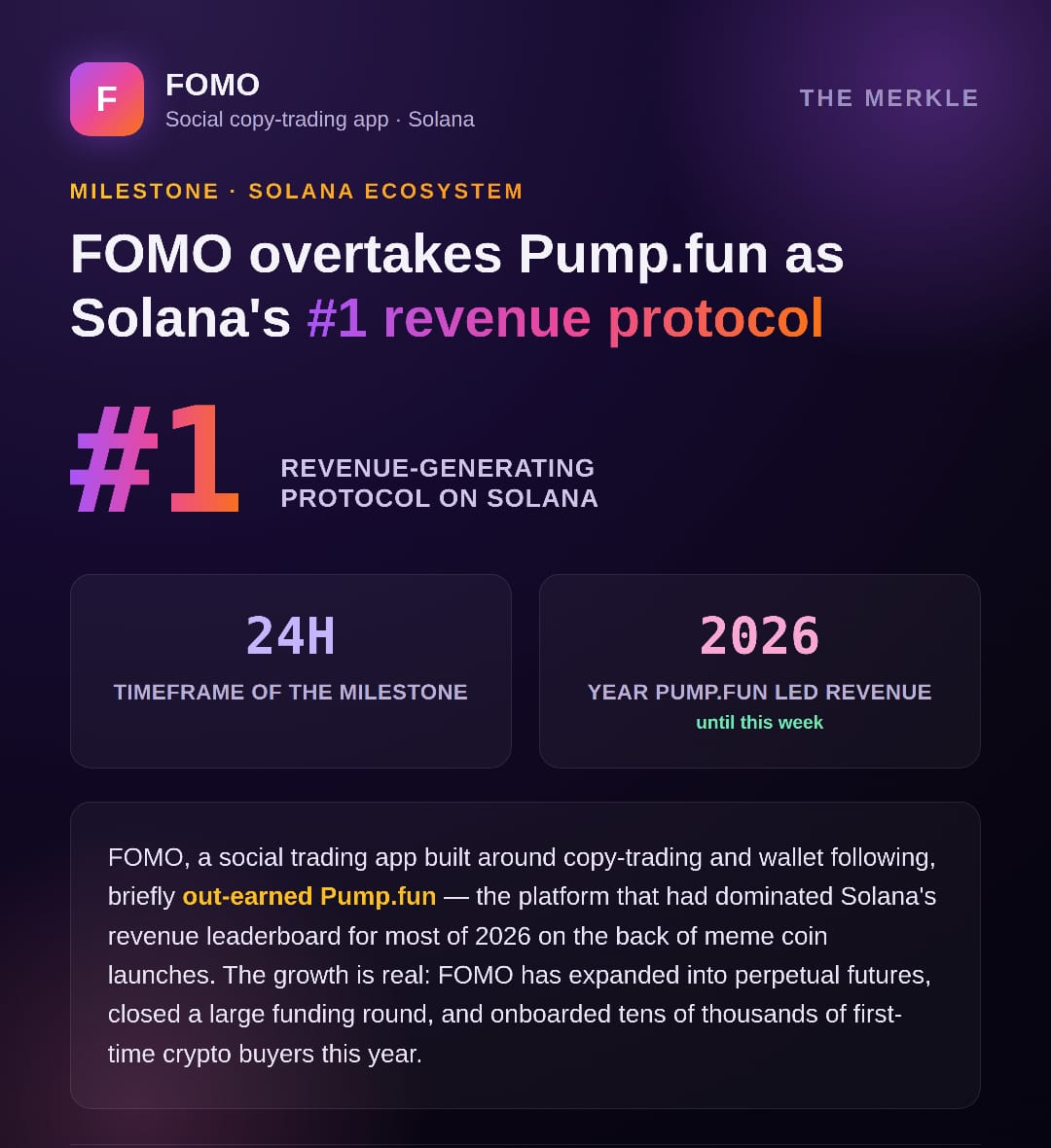
According to data shared by Solana Floor, FOMO has surpassed Pump.fun to become the number one revenue-generating protocol on Solana over the past 24 hours.

That’s a genuinely significant milestone in the Solana ecosystem, since Pump.fun has spent most of this year sitting comfortably atop the revenue leaderboard, driven by its dominance in meme coin launches. For FOMO, a social trading app built around copy-trading, wallet following, and a real-time feed of other users’ trades, to briefly outpace that on a single day’s revenue is the kind of headline that gets circulated fast in crypto Twitter.
I don’t think the achievement itself is fake or manufactured. FOMO has genuinely been on a steep growth curve this year, expanding into perpetual futures, closing a large funding round, and pulling in tens of thousands of first-time crypto buyers through simplified onboarding. The revenue number is real. What I keep coming back to, though, is a much less comfortable question sitting right underneath it: revenue generated from who, exactly, and at what cost to them.

The Uncomfortable Number Nobody’s Celebrating
That’s the exact question crypto trader Seyoung raised in a pointed follow-up post, asking bluntly why FOMO’s cofounder is flaunting daily revenue when roughly 85% of the platform’s users are reportedly sitting in loss. The post goes further, noting that FOMO is now making more in a single day than its best trader has ever realized in profit, a comparison that, if accurate, is genuinely jarring once you actually sit with it.
One day of platform revenue exceeding the best possible outcome any individual user has ever achieved on that same platform isn’t just an imbalance, it’s close to an indictment of the entire business model.
I want to be honest about what I’m reacting to here, because I think it matters. A trading platform earning revenue from fees isn’t inherently predatory, every exchange and trading app on earth works that way. But when the overwhelming majority of your users are losing money while the platform itself is setting all-time revenue records, the fee structure stops looking like a service charge and starts looking like the actual product. The phrase used in the post, “the extraction machine churns,” is blunt, but based on the numbers being described, it’s not an unfair way to put it.
How FOMO’s Fee Model Actually Works
Understanding why this dynamic exists requires understanding what FOMO actually charges. The platform runs on a flat $1 fee per trade, a structure that’s simple to understand but has a specific consequence worth thinking through: it disproportionately punishes smaller trades and frequent traders, the exact behavior a social, copy-trading, feed-driven app is specifically designed to encourage. Watching other traders’ moves in real time and being able to instantly mirror them is a genuinely compelling product experience, but it also creates constant pressure to trade more often, chasing whatever’s moving in the feed. Every one of those trades costs a flat dollar regardless of size or outcome, which means the platform earns steadily whether the underlying trade wins or loses.
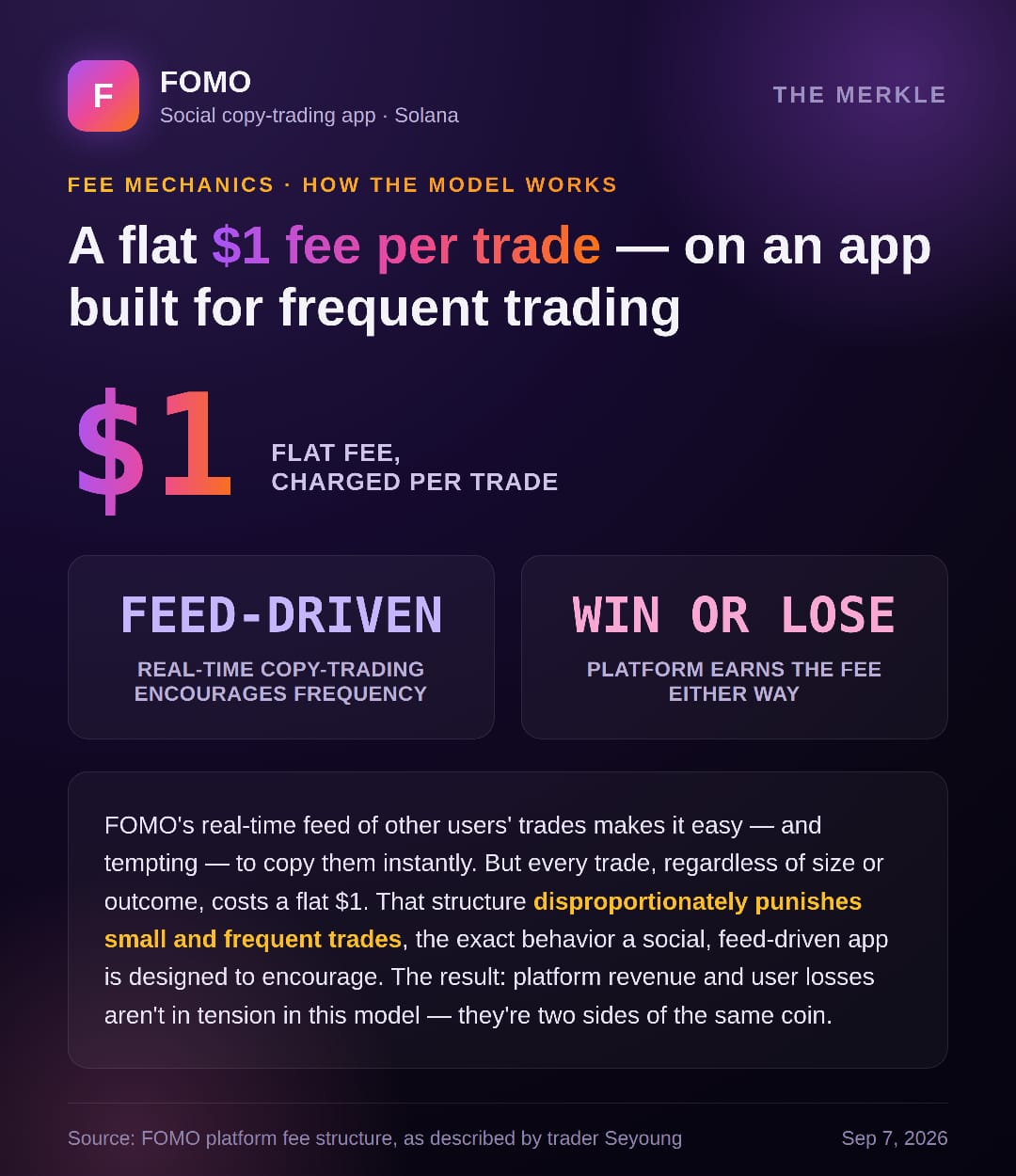

That’s really the mechanical explanation behind the number Seyoung raised. A social feed built to encourage frequent, reactive trading, paired with a flat per-trade fee, is a combination that generates reliable revenue for the platform almost independent of whether users are actually making money. The platform’s growth and the users’ losses aren’t really in tension with each other in that model, they’re two sides of the same coin.
Why This Pattern Isn’t Unique To FOMO
I think it’s worth being fair here too, because this specific tension isn’t something FOMO invented, and it isn’t exclusive to this one platform. It’s a well-documented pattern across retail trading generally, and it’s shown up repeatedly across crypto trading apps, meme coin launchpads, and even traditional retail brokerages, where a small number of highly active or highly successful users generate a disproportionate share of trading volume, while the majority end up net negative over time. The platform earning steady fee revenue regardless of individual outcomes isn’t unique to crypto either, it’s the same basic economics behind spread-based brokerages and high-frequency retail trading platforms more broadly.
What makes this moment specifically uncomfortable isn’t that the dynamic exists, it’s the timing and the framing. Publicly celebrating a revenue milestone, framed as outcompeting a major rival, on the same day someone is publishing data suggesting the vast majority of the user base funding that milestone is losing money, creates a genuinely bad look regardless of whether the underlying business model is unusual or not. Silence on a milestone like this might have drawn less attention. Active celebration of it, next to a specific and damning loss statistic, is what turned this into a story worth writing about.
What This Actually Means For Anyone Using The App
If you’re an active FOMO user, or considering becoming one, I think the honest takeaway here isn’t that the platform is fraudulent or that the revenue figures are fabricated. It’s that the app’s entire design, a social feed encouraging frequent copy-trading, paired with a flat per-trade fee, structurally benefits from trading volume far more reliably than it benefits from trading success. That’s worth internalizing before getting swept up in watching other traders’ wins scroll past in real time, because the platform earning a record-breaking day in revenue doesn’t tell you anything about whether the trade you’re about to copy is actually going to work out.
Neither FOMO nor its cofounder has publicly addressed the specific 85% loss claim as of this writing, and it’s worth treating that figure with appropriate caution since the methodology behind it hasn’t been independently verified in either post referenced here. But the broader question raised, why a platform celebrates record revenue while the community funding it is reportedly losing money at that scale, doesn’t really need the exact percentage to be perfectly precise in order to be worth asking. The gap between “the platform is thriving” and “the users are thriving” is the actual story here, and right now, based on what’s been publicly shared, those two things appear to be moving in opposite directions.
Disclosure: This is not trading or investment advice. Always do your research before buying any cryptocurrency or investing in any services.
Follow us on Twitter @themerklehash to stay updated with the latest Crypto, NFT, AI, Cybersecurity, and Metaverse news!